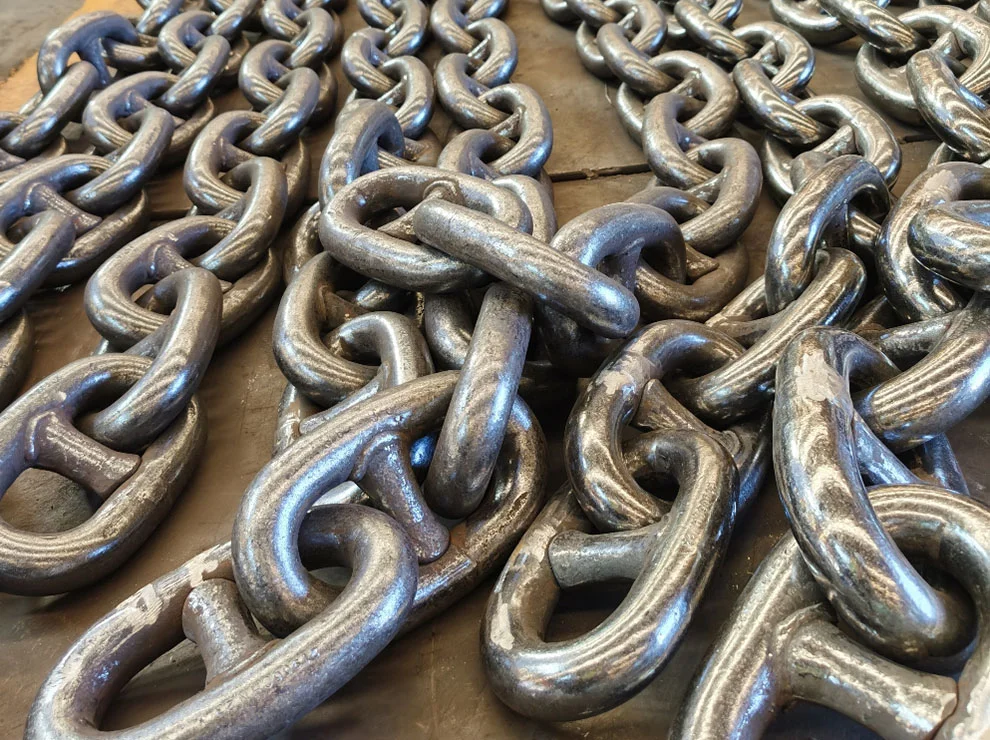
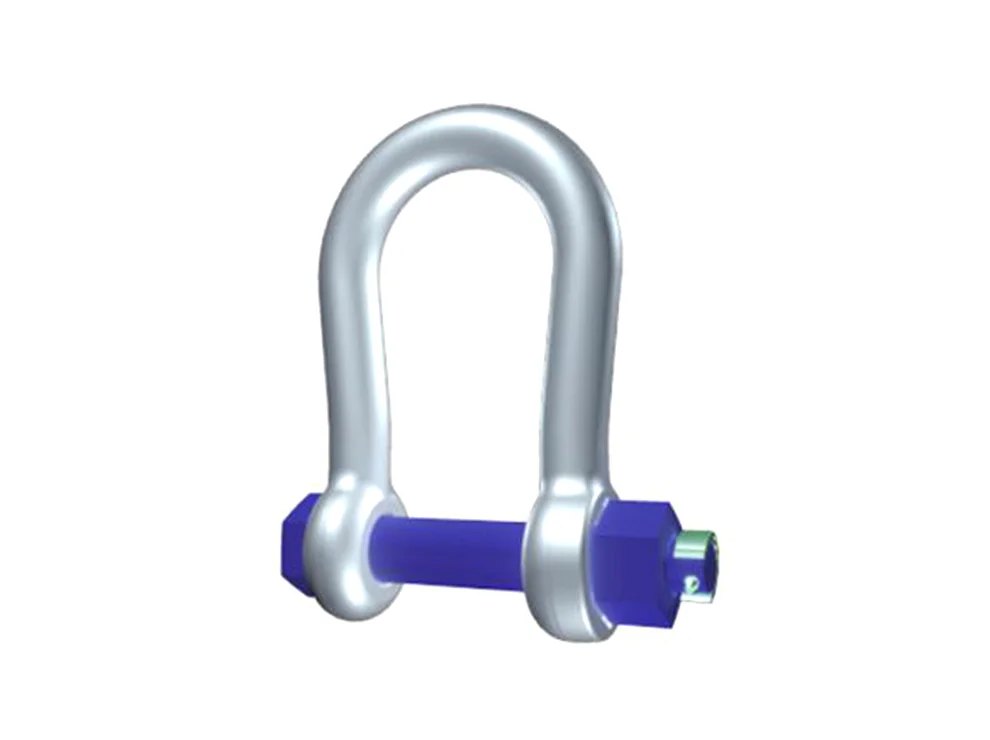
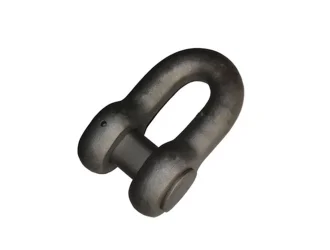
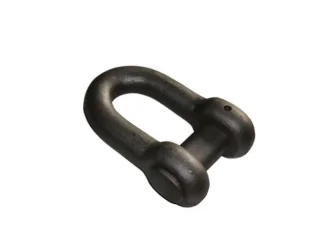
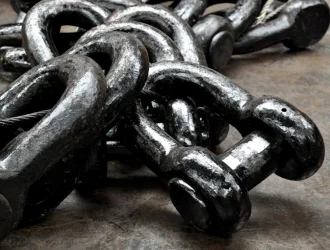
An end shackle (ES), also called an anchor shackle (AS), is used to connect the anchor chain to the anchor itself – it is the final link between the chain and the anchor.
The term "end shackle" describes its position (at the end of the chain), while "anchor shackle" describes its function (connecting to the anchor).
End Shackle Anchor Shackle Drawing:
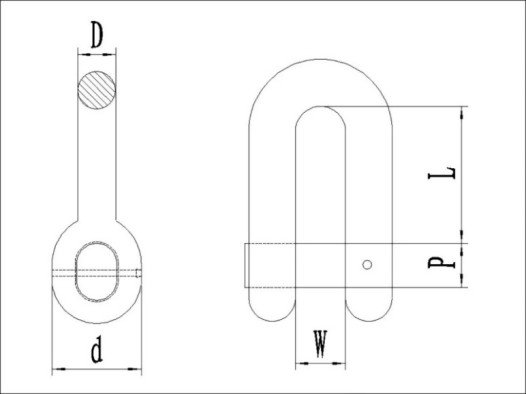
End Shackle Anchor Shackle Diagram:
Specification Of End Shackle Anchor Shackle:
| Chain size | Size(mm) | Unit weight |
| (mm) | D | L | W | d | P | (kg) |
| 20.5 | 29 | 94 | 49 | 64 | 37 | 3.3 |
| 24 | 34 | 110 | 57 | 74 | 43 | 5 |
| 26 | 36 | 120 | 63 | 81 | 46 | 6 |
| 28 | 39 | 129 | 68 | 87 | 50 | 8 |
| 30 | 42 | 138 | 72 | 93 | 54 | 9.5 |
| 32 | 45 | 147 | 76 | 99 | 58 | 12 |
| 34 | 48 | 156 | 81 | 105 | 61 | 14 |
| 36 | 50 | 166 | 87 | 112 | 65 | 17 |
| 38 | 53 | 175 | 92 | 118 | 69 | 20 |
| 40 | 56 | 184 | 96 | 124 | 72 | 23 |
| 42 | 59 | 193 | 100 | 130 | 76 | 26 |
| 44 | 62 | 202 | 105 | 136 | 79 | 29 |
| 46 | 64 | 212 | 111 | 143 | 83 | 33 |
| 48 | 67 | 221 | 116 | 149 | 86 | 37 |
| 50 | 70 | 230 | 120 | 155 | 90 | 41 |
| 52 | 73 | 239 | 124 | 161 | 93 | 45 |
| 54 | 76 | 248 | 129 | 167 | 97 | 50 |
| 56 | 78 | 258 | 135 | 174 | 101 | 54 |
| 58 | 81 | 267 | 140 | 180 | 104 | 65 |
| 60 | 84 | 276 | 144 | 186 | 108 | 70 |
| 62 | 87 | 285 | 148 | 192 | 112 | 76 |
| 64 | 90 | 294 | 153 | 198 | 115 | 82 |
| 66 | 92 | 304 | 159 | 205 | 119 | 94 |
| 68 | 95 | 313 | 164 | 211 | 122 | 101 |
| 70 | 98 | 322 | 168 | 217 | 126 | 108 |
| 76 | 106 | 350 | 183 | 236 | 137 | 141 |
| 81 | 113 | 373 | 195 | 251 | 146 | 171 |
| 87 | 122 | 400 | 208 | 270 | 157 | 218 |
| 90 | 126 | 414 | 216 | 279 | 162 | 243 |
| 95 | 133 | 437 | 228 | 295 | 171 | 290 |
| 100 | 140 | 460 | 240 | 310 | 180 | 335 |
| 111 | 155 | 511 | 267 | 344 | 199 | 445 |
| 122 | 171 | 560 | 292 | 378 | 220 | 550 |
| 127 | 178 | 584 | 304 | 394 | 229 | 600 |
| 132 | 185 | 607 | 316 | 409 | 238 | 675 |
| 137 | 192 | 630 | 328 | 425 | 247 | 750 |
| 142 | 199 | 653 | 340 | 440 | 256 | 900 |
Frequently Asked Questions (FAQ)
1.Are end shackle and joining shackle the same thing?
No, they are not the same.
An end shackle (ES), also called an anchor shackle (AS), is used to connect the anchor chain to the anchor itself – it is the final link between the chain and the anchor.
The term "end shackle" describes its position (at the end of the chain), while "anchor shackle" describes its function (connecting to the anchor). Both names refer to the same component.
End shackles and joining shackles are not interchangeable. Always use the correct shackle type for each position in the anchor chain system.
2. What is the function of an end shackle and where is it installed?
An end shackle is used to connect the final link of the anchor chain to the anchor ring or crown. It serves as the critical connection between the vessel's anchor and the anchor chain.
It is installed at the very end of the anchor chain, just before the anchor. This is the shackle that takes the full load of the vessel when at anchor, making it one of the most heavily stressed components in the entire mooring system.
3. What are the size and weight differences?
An end shackle is larger and heavier than a joining shackle.
For the same chain diameter, an end shackle has a diameter of approximately 1.4d and is noticeably heavier than a joining shackle (which has a diameter of approximately 1.3d). For example, at 22mm chain size, an end shackle weighs about 3.9kg, while a joining shackle weighs about 2.6kg.
This extra size and weight are intentional – the end shackle must withstand the shock loads, abrasion, and constant stress of holding the vessel's anchor in position, often in harsh sea conditions.
4. How does an end shackle connect to the chain?
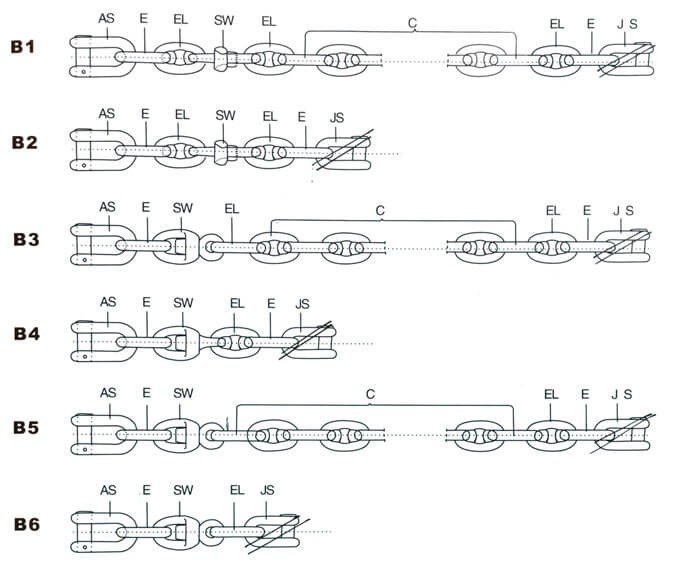
An end shackle typically connects directly to the anchor ring at one end and to a swivel or connecting component at the other end.
An end shackle provides a more direct connection to the anchor. In many configurations, a swivel is installed between the end shackle and the chain to prevent twisting.
5. Does an end shackle pass through the windlass gypsy wheel?
Generally no – and this is an important distinction.
Unlike a joining shackle, which must travel through the windlass during chain extension and retrieval, the end shackle is typically stopped at the chain stopper or hawse pipe when the anchor is fully housed.
This is why different shackle types exist – each is designed for its specific position and function in the anchor chain system.